Marketing · 10 Oct 2026 · 13 min
Tools to find keywords: what they cost, what they are for, and the free one most people skip
Prices checked against each vendor's own page on 10 October 2026, not copied from another listicle. What each tool is genuinely good at, what it costs over a year once seats and annual billing are counted, and why the best keyword tool for a site that already exists is free.
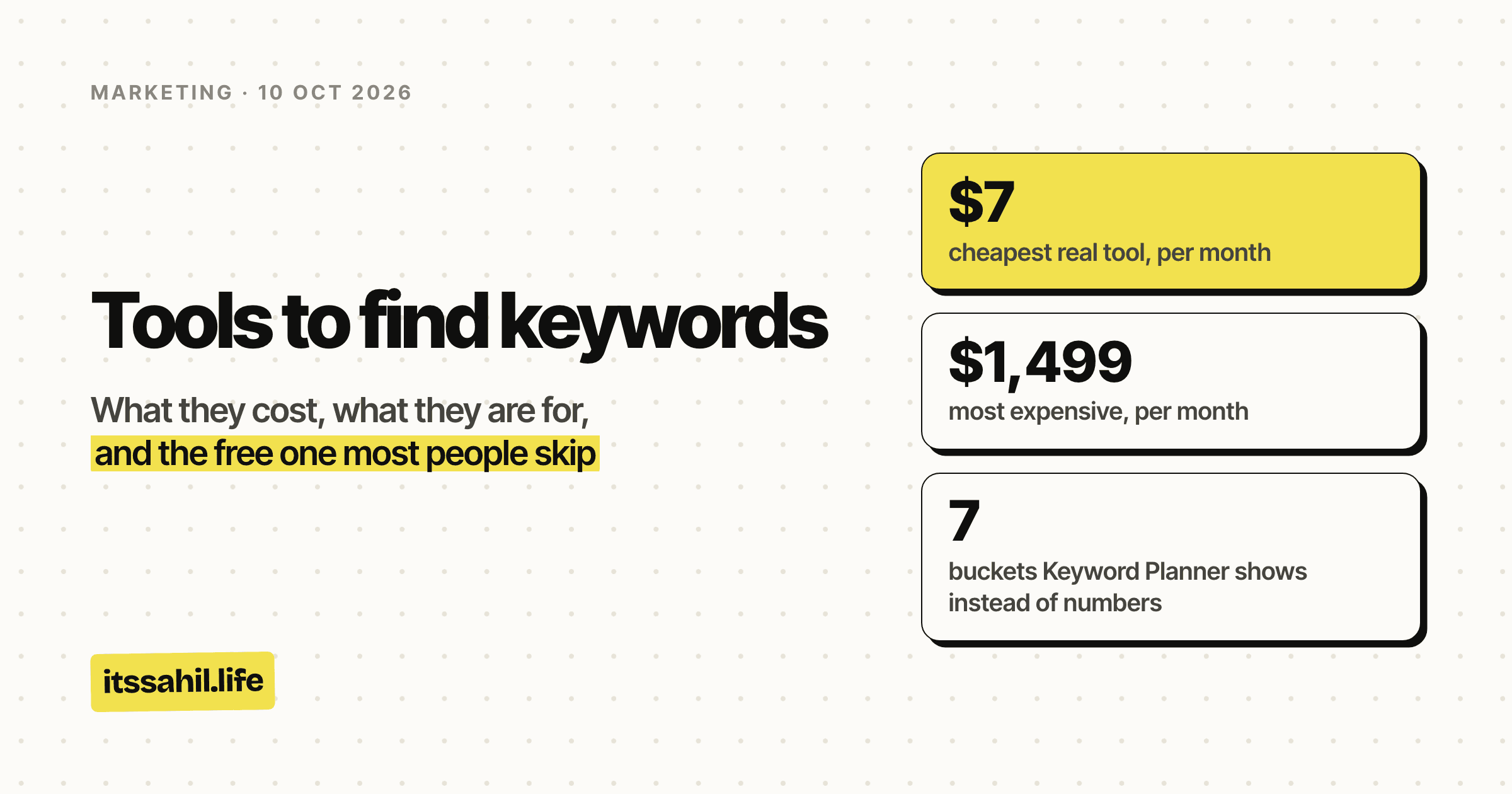
Every price here was checked on the vendor's own pricing page on 10 October 2026. Where a vendor blocked that, the figure is marked as second-hand. Every screenshot is that tool's own public page, captured the same day.
- cheapest real tool, per month
- $7
- most expensive, per month
- $1,499
- buckets Keyword Planner shows instead of numbers
- 7
- tools that know real search volume
- 0
The short answer
- Your site already gets traffic? Use Google Search Console. It is free and it is the only tool here showing your real searches.
- Starting from nothing? Google Keyword Planner and Google Trends, free.
- Doing this seriously? Ahrefs if your work involves links, Semrush if you run organic and paid search together.
Everything else on this page is detail on those three sentences.
Which one should you use
| If you are | Use this | It costs |
|---|---|---|
| Starting a blog with no traffic yet | Keyword Planner, Trends, AlsoAsked | Free |
| Running a site that already gets visits | Search Console | Free |
| One person, small budget | Keywords Everywhere | $84 a year |
| One person, want a proper workspace | Mangools | About $29 a month |
| Building links, studying competitors | Ahrefs | From $129 a month |
| Running organic and paid together | Semrush | From $139 a month |
| Reporting to people who do not do SEO | Moz Pro | About $49 a month |
The rule underneath all of it: do not buy a tool before you have published twenty posts. Until then the honest answer to "what should I write about" is the thing you already know, and no subscription improves on that.
What they cost
The two highlighted bars are the real entry prices for the two market leaders. Their cheaper tiers exist, but they are thin enough that most people upgrade within a month.
| Tool | Entry | Mid | Top | Source |
|---|---|---|---|---|
| Ahrefs | $29 | $129, $249 | $449, $1,499 | Vendor |
| Semrush | $139 | $199, $299 | $549 | Vendor |
| Keywords Everywhere | $84 a year | $168 a year | $480 to $1,440 a year | Vendor |
| Moz Pro | about $49 | about $99 to $179 | about $299 | Third party |
| Mangools | about $29 | about $49 to $69 | about $129 | Third party |
| Ubersuggest | not verified | not verified | not verified | Blocked |
| Search Console | Free | Free | Free | |
| Keyword Planner | Free | Free | Free |
Vendor means read off that company's own pricing page on 10 October 2026. Third party means their page would not load and the figure comes from reporting that agrees on monthly prices but not annual ones. Check those three yourself before paying.
How they compare
| Tool | Real search data | Link data | Free to use | Best at |
|---|---|---|---|---|
| Search Console | Yes, your own site | Your own links | Fully free | What you already rank for |
| Keyword Planner | Google's, in ranges | None | Fully free | Rough volume bands |
| Ahrefs | Modelled | Strongest | Your own sites only | Links and competitors |
| Semrush | Modelled | Good | 10 reports a day | Organic and paid together |
| Moz Pro | Modelled | Smaller index | Limited free queries | Explaining SEO to others |
| Mangools | Modelled | Basic | Trial | Budget, single site |
| Keywords Everywhere | Modelled | None | Credits only | Volumes while you browse |
Read the first column carefully. Only Search Console shows real searches. Every paid tool is estimating, which is the most important thing on this page and the part nobody selling a subscription will lead with.
Google Search Console, free
| Price | Free, permanently |
| You need | A site you can verify you own |
| Data | Real queries, impressions, clicks and position |
| Best for | Any site that already gets some search traffic |
What it is good at
- The only source here reporting what actually happened, not an estimate
- Queries ranking between positions 5 and 20: Google already thinks you are relevant, so a better page or title moves these faster than any new page
- Queries with impressions but no clicks: you appear and get skipped, which usually means the title is the problem, not the content
Where it falls short
- Only knows queries you have already appeared for, so it is useless on a new site
- Hides rare queries for privacy, so the totals never quite add up
- The interface buries the useful comparisons
Buy it if you have a site. It costs nothing, and it is the one tool on this list most people never open.
Google Keyword Planner, free
| Price | Free, inside a Google Ads account |
| Data | Google's own, from its ad system |
| Catch | Ranges, not numbers, unless you spend on ads |
| Best for | Rough volume bands on a new topic |
The catch, in full. Unless your Ads account spends enough, it shows bands instead of numbers:
| Band | What it actually tells you |
|---|---|
| 0 | Nobody searches it |
| 1 to 100 | Barely anyone |
| 100 to 1K | A small niche |
| 1K to 10K | A tenfold range, too wide to prioritise with |
| 10K to 100K | Popular |
| 100K to 1M | Very popular |
| 1M and above | Huge |
Google has never published the spending threshold that unlocks exact figures, and confirmed years ago that the throttling is deliberate.
Where else it falls short
- Shaped for advertisers, so it groups terms the way an ad system wants
- Thin on question phrasings and on anything nobody bids on, which is often where the easy traffic is
Buy it if you want Google's own numbers and can live with the bands.
Ahrefs, from $29 a month
| Plans | $29 Starter, $129 Lite, $249 Standard, $449 Advanced, $1,499 Enterprise |
| Extra seat | $40 a month on Lite, $60 on Standard, $80 on Advanced |
| Annual | Up to 17% off, figures not published |
| Free option | Ahrefs Free, for sites you have verified as yours |
| Best for | Link data and competitor research |
What it is good at
- The cleanest keyword interface of the paid tools
- Parent and child topics, which tell you whether two keywords belong on one page or two
- The link index. If you want to see who links to a competitor and what that link is worth, this is the tool, and it is the real reason people pay
Where it falls short
- The cheap tiers are thin enough to feel like a funnel
- Seats are expensive, so small teams end up on a bigger plan than they need
- Credits on the lower plans run out sooner than you expect
Reputation. One of the two industry standards, trusted on links, resented at renewal time. I use the v3 API for a side project, which is the part of the product I would defend most readily.
Buy it if links are part of your job. If you only do content and on-page, you are paying for half a tool you will never open.
Semrush, from $139 a month
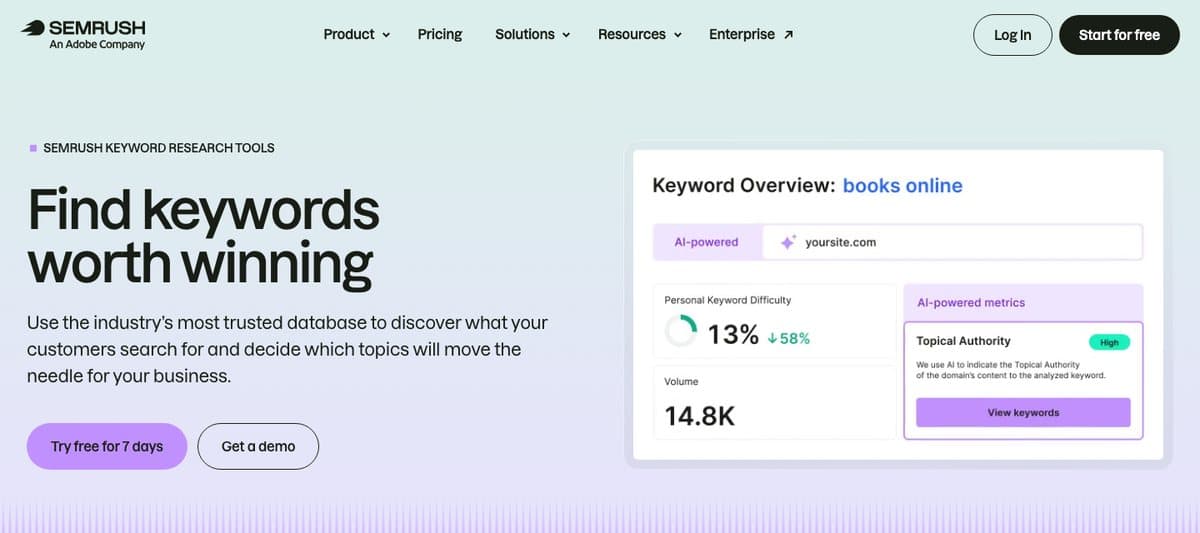
| Plans | $139 SEO, $199 Starter, $299 Pro+, $549 Advanced |
| Paid annually | $117.33, $165.17, $248.17, $455.67 a month |
| Extra user | From $45 a month |
| Free option | One demo project, 10 reports a day |
| Best for | Teams running organic and paid search together |
What it is good at
- Breadth. Organic, paid, content, social and now AI search visibility in one subscription
- Tracking how AI assistants mention you, on the Starter tier and above
- Usually the one that survives a procurement conversation, because it serves a whole marketing team rather than one SEO
Where it falls short
- So much product that you will never open most of it
- The keyword screen is busier than Ahrefs for the same job
- Tier names changed recently, which makes older comparison articles wrong
- The sticker price is for one person
Buy it if you run organic and paid together, or one tool has to serve the whole team.
Moz Pro, about $49 a month

| Plans | About $49, $99, $179 and $299 a month |
| Annual | About 20% off |
| Source | Third-party reporting; Moz's pricing page would not load |
| Best for | Reporting to people who do not do SEO |
What it is good at
- Domain Authority is the metric non-specialists have heard of, which helps when you are reporting upward
- The friendliest interface of the paid tools
- A sensible keyword difficulty score
Where it falls short
- A smaller link index than Ahrefs or Semrush
- It has been the third choice for so long that the gap is now part of its identity
Reputation. The oldest brand in the category. Moz taught a generation of SEOs, and lost the tooling race anyway.
Buy it if your audience is a boss or a client rather than another SEO.
Mangools, about $29 a month
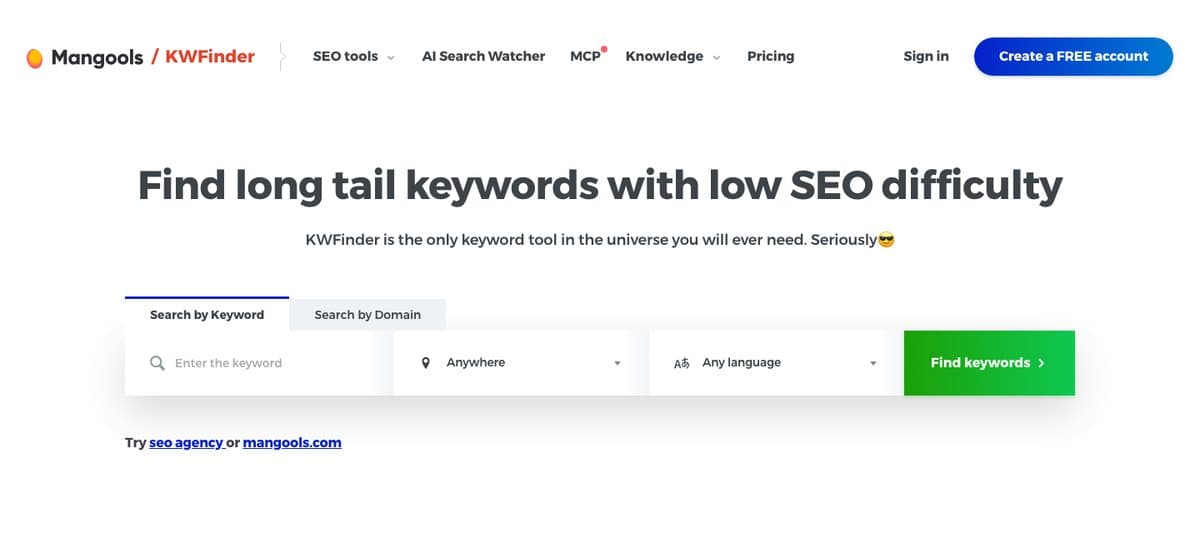
| Plans | About $29 Entry, $49 Basic, $69 Premium, $129 Agency |
| Source | Third-party; sources agree on monthly prices, not annual |
| Includes | Five tools on every plan, KWFinder is not sold alone |
| Best for | Freelancers and single sites on a budget |
What it is good at
- The budget tool people actually keep using
- A clean interface and a difficulty score you can read at a glance
- Covers a single site's needs at around a third of the big two's price
Where it falls short
- Daily lookup limits on the lower plans can interrupt a real research session
- Link data is not in the same league
Buy it if Ahrefs and Semrush feel like too much tool for one site.
Keywords Everywhere, $84 a year
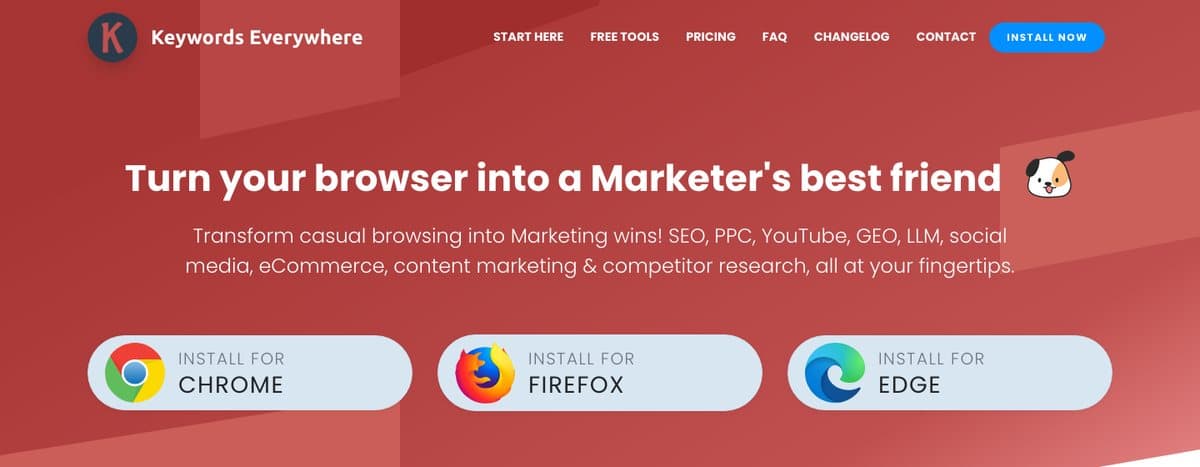
| Plans | $84, $168, $480 or $1,440 a year |
| Credits | 100K, 400K, 2 million or 8 million a year |
| One credit | Volume, CPC, competition and a 12 month trend for one keyword |
| Expiry | Credits expire after a year |
| Best for | Seeing volumes while you search normally |
What it is good at
- It is a browser extension, so volumes appear beside searches you were already doing
- Turns keyword research from a task you schedule into something that happens while you work
- The cheapest real tool here, at about $7 a month
Where it falls short
- Watch the credit maths. One Google search showing 8 related keywords and 20 "people also search for" terms costs 29 credits, not one
- A complement to a research tool, not a replacement for one
Buy it if you want volumes in front of you without opening another app.
Ubersuggest
No screenshot and no pricing. Their site served a bot check to every attempt, so I am not going to guess at either.
What can be said without them:
- It is Neil Patel's tool, aimed at beginners
- It has historically offered a lifetime deal, unusual in this category
- Opinion on it is more divided than on anything else here, and its data is widely considered thinner than the big two
If the lifetime option still exists it changes the maths completely, which is exactly why you should check it yourself.
Google Trends and AlsoAsked, free
Two supplements rather than research tools, each good at exactly one question.
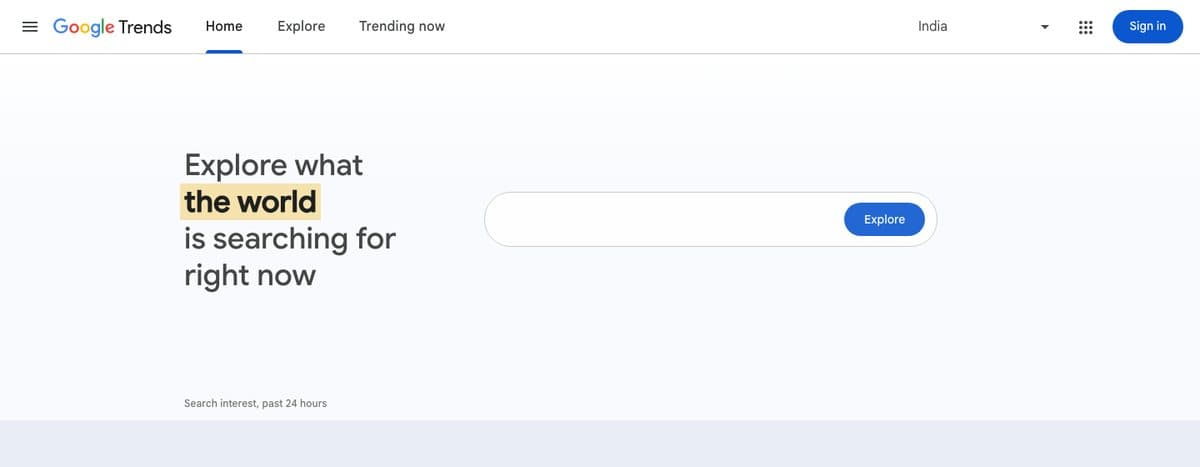
Google Trends answers: is this rising or dying? It shows relative interest over time, never absolute volume. A keyword with decent volume and a five-year decline is a different bet from the same volume trending up.
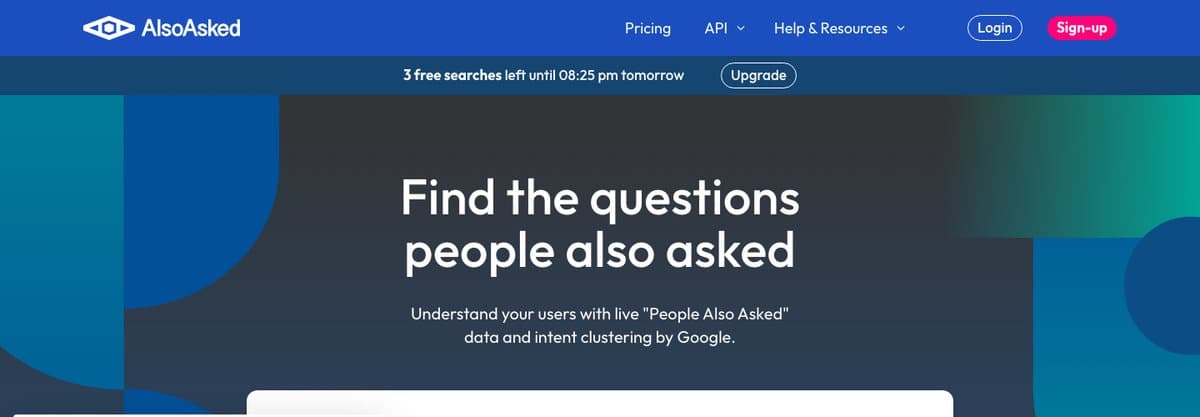
AlsoAsked answers: what questions sit around this topic? It maps the "people also ask" questions Google shows. Use it to find the subheadings for a piece once the topic is chosen, not to choose the topic.
| Google Trends | AlsoAsked | |
|---|---|---|
| Price | Free | Free tier with daily limits |
| Shows | Interest over time | Related questions |
| Use it for | Deciding whether a topic is worth it | Structuring the piece |
The number nobody wants to say out loud
No tool on this page knows real search volume. Google does not publish it. Every third-party figure is a model built from clickstream panels, Keyword Planner's bands and a lot of extrapolation.
That is why one keyword can come back at 2,400 in one tool and 9,000 in another, and neither is lying. Three rules follow:
- Treat volume as a size, not a measurement. Is it a hundred, a thousand or ten thousand? That is the useful question.
- Never compare one tool's number with another's. Only compare within a single tool, where at least the model is consistent.
- Difficulty scores are worse. Each vendor calculates its own and none of them are comparable.
What the year actually costs
The monthly price is the price for one person, paying month to month. Here is what common setups really cost, using only the figures checked above:
| Setup | Per month | Per year |
|---|---|---|
| Keywords Everywhere, Bronze | about $7 | $84 |
| Ahrefs Lite, one person | $129 | $1,548 |
| Semrush SEO, one person, paid annually | $117.33 | $1,408 |
| Semrush SEO, one person, paid monthly | $139 | $1,668 |
| Ahrefs Lite, two people | $169 | $2,028 |
| Semrush Pro+, three people | at least $389 | at least $4,668 |
Three things push the real number up:
- Seats. Both leaders charge per person. The three-person Semrush row is $299 plus two extra users from $45 each.
- Annual lock-in. The discount is real, around 15 to 17%, but it commits you for a year to a tool you might drop by month four. Pay monthly for the first quarter, then switch.
- Limits. Lower tiers carry limits that look generous and are not. That is the most common reason people upgrade, and it is designed to be.
One last thing
Check the prices before you buy. Every figure here is dated 10 October 2026, three are second-hand because the vendors would not let me verify them, and this category changes its pricing more often than it changes its products.
An article that tells you what something cost without telling you when is not giving you a price. It is giving you a memory.