Marketing · 13 Oct 2026 · 14 min
Blog post examples, and what each one gets right
Thirteen real blog posts, one for each common type, from a Paul Graham essay to a Cloudflare outage report and a Zerodha Varsity chapter. For each one, the thing worth copying and the thing to avoid, and what they have in common when you count.
Most lists of blog post examples show a homepage, call it clean, and move on. That is not much use when you are trying to write one. What helps is seeing a specific post do a specific thing well, and knowing which part to borrow.
So here are 13 real posts, one for each common type, all free to read. For each one: what kind of post it is, the one thing it does that you could copy, and anything it does that you should not. I opened every one of them on 13 October 2026 and counted what was on the page, rather than going on how I remembered them.
If you want the format behind posts on this site, that is in the blog writing format piece. This one is the other half: other people's posts, and what they teach.
- real posts, one per type
- 13
- show a date
- 11 of 13
- have a table of contents
- 3 of 13
- have an FAQ section
- 0
- words, shortest to longest
- 600 to 10,500
The short version
| Type | Example | The thing to copy |
|---|---|---|
| Personal essay | Paul Graham, How to Do Great Work | Caveats go in numbered notes, so the argument never hedges |
| Opinion | Joel Spolsky, Things You Should Never Do | One checkable story first, then the claim, stated strongly |
| List post | Sam Altman, How To Be Successful | Every item is a short instruction, so the list is its own summary |
| How-to | Chris Beams, How to Write a Git Commit Message | All the rules in one list up front, then a section for each |
| Explainer with drawings | Tim Urban, Why Procrastinators Procrastinate | Named characters that carry the explanation |
| Definition | Mailchimp, What is SEO in digital marketing? | The definition is the first sentence |
| Teaching with numbers | Zerodha Varsity, The Need to Invest | One worked example, carried into tables you can check |
| Original data | Ahrefs, 96.55% of Content Gets No Traffic | One statistic becomes the whole outline |
| Case study | Brian Dean, the Skyscraper case study | The denominator: how many emails it took |
| Outage report | Cloudflare, the 18 November 2025 outage | The actual code that broke, and the wrong first guess |
| Comparison | Zapier, Obsidian vs. Notion | Every heading is a verdict |
| Changelog | Linear, Introducing Loops | Who gets it, what it costs, and when, in exact terms |
| Business explainer | Finshots, What makes a hospital profitable? | One sentence saying what you will learn, before the story |
Posts that argue
A personal essay: Paul Graham, How to Do Great Work
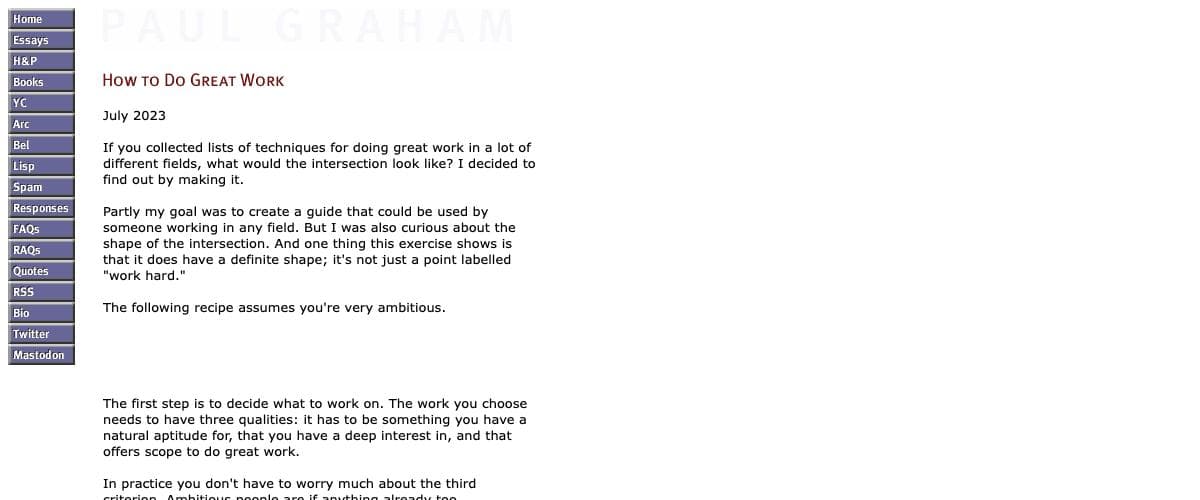
Published in July 2023, and about 10,500 words long with 29 numbered notes at the end. There are no headings, no byline beyond the site's name, and no images. It opens by asking what you would get if you collected the advice of people who did great work in many fields, and sets out to find the answer by writing it.
What to copy: the notes. Every qualification, exception and aside goes into a numbered note at the end, so the main text can say one thing at a time without stopping to hedge. It reads with total confidence and still has all the caveats. Below the notes is a list of the people who read drafts, which tells you the argument was tested before it was published.
What not to copy: 10,500 words with no headings works for a writer people already seek out. On a new site, most readers will not find their way through it.
An opinion piece: Joel Spolsky, Things You Should Never Do, Part I
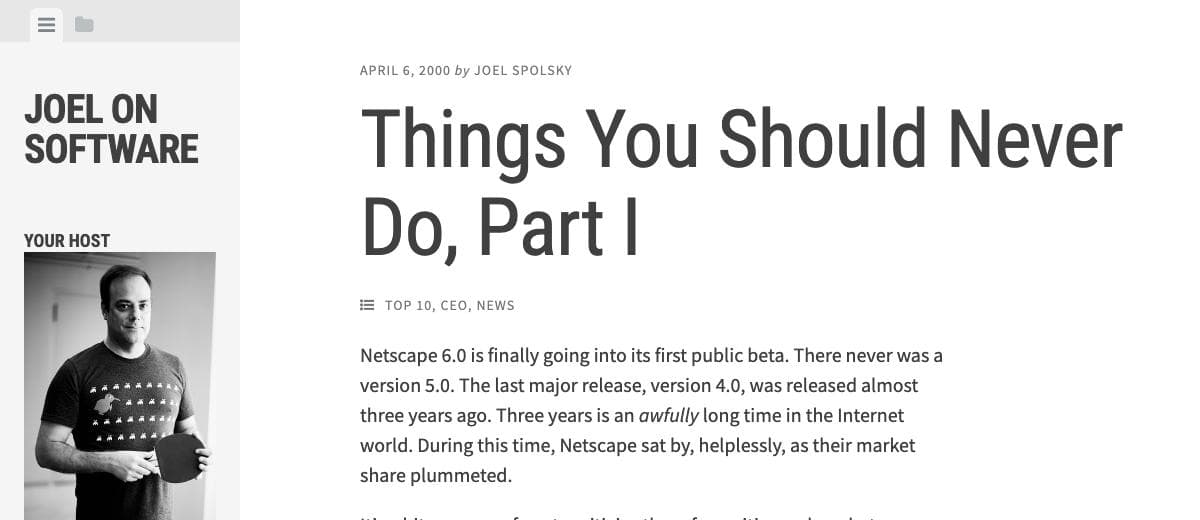
Written on 6 April 2000, about 1,400 words. It opens with a fact anyone could check at the time: Netscape 6.0 was going into beta, there had never been a version 5.0, and version 4.0 was almost three years old.
What to copy: the order. One concrete, checkable story comes first, and only then the claim, stated as strongly as it can be: that rewriting code from scratch is the single worst strategic mistake a software company can make. By the time you reach the opinion, you have already seen the evidence. An opinion piece that starts with the opinion asks the reader to trust you. One that starts with the story lets them get there on their own.
What not to copy: the photos. There are four, unrelated to the argument and with no alt text. A picture that is not doing a job is taking up space.
A list post: Sam Altman, How To Be Successful
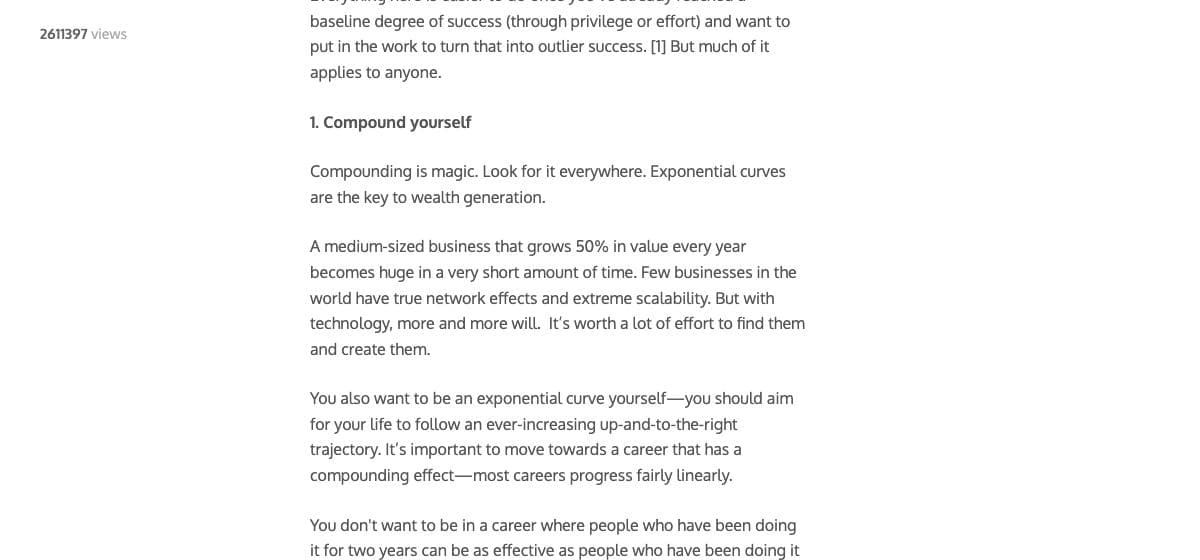
Posted on 25 January 2019, about 3,250 words, in 13 numbered points.
What to copy: the item names. Every point is a short instruction: compound yourself, be hard to compete with, build a network. Read only the 13 names and you have the post. Many list posts name their items with topics, like "Networking" or "Competition", which tell you what the section is about but not what it says. An instruction tells you both.
What not to copy: the points are bold text inside paragraphs, not headings. A screen reader cannot jump between them, and nothing can build a contents list from them. The same names, marked up as headings, would cost nothing.
Posts that teach
A how-to: Chris Beams, How to Write a Git Commit Message
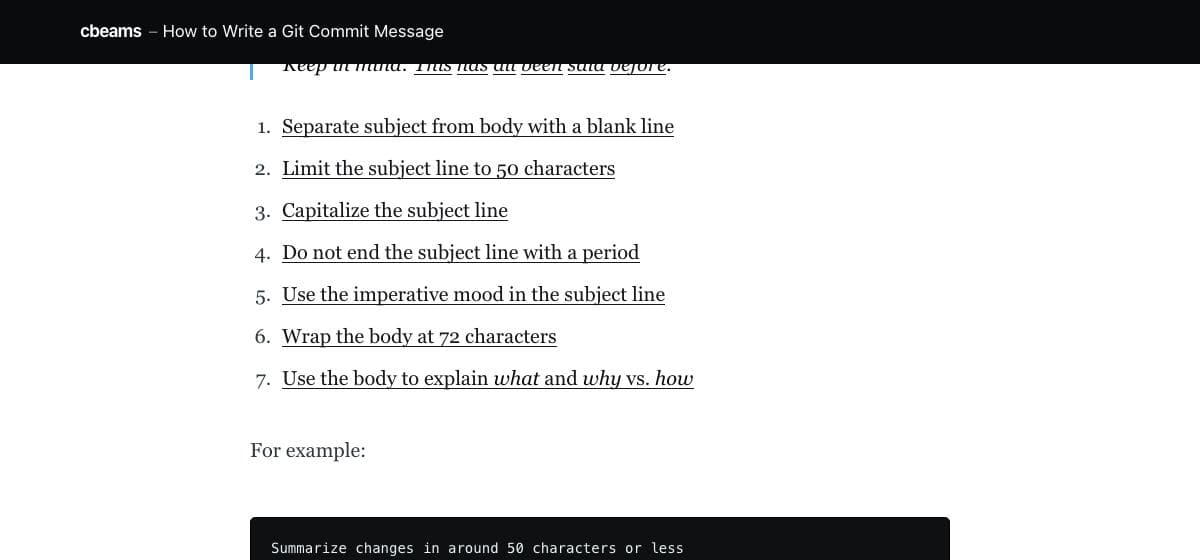
Dated 31 August 2014, about 2,750 words. It opens with the mess most readers will recognise, a log of meaningless commit messages, using examples from the author's own early work.
What to copy: the rules come first, all seven, as one plain list. Then one complete example that follows all seven. Only after that does each rule get its own section with before and after examples. A reader who stops after the list can already do the thing. A reader who wants the reasons can keep going. The post works at both depths.
What not to copy: the two screenshots have the alt text "gh1" and "gh2", which tells a screen reader nothing.
An explainer with drawings: Tim Urban, Why Procrastinators Procrastinate
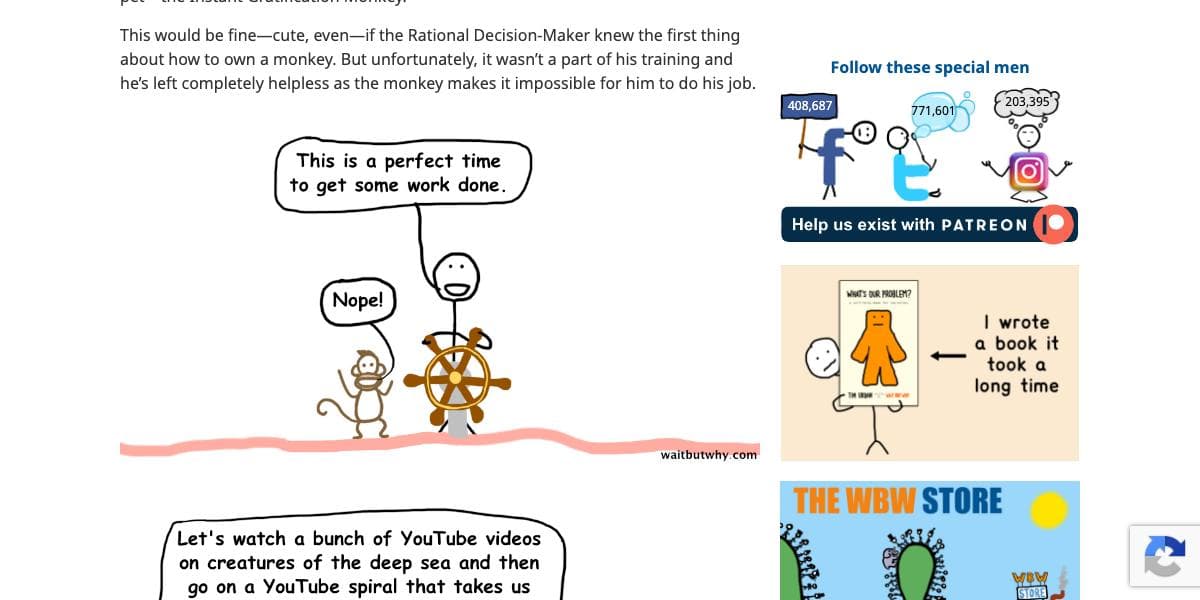
Published on 30 October 2013 on Wait But Why, about 1,250 words with 12 drawings.
What to copy: the characters. The post explains procrastination through three of them, the Rational Decision-Maker, the Instant Gratification Monkey and the Panic Monster, and brings them back in drawing after drawing. A mechanism becomes a story with a cast, and you remember it because you remember the monkey. The drawings are stick figures. They do not need skill, they need a consistent cast.
What not to copy: all 12 images have empty alt text. Anyone who cannot see them loses the cast, which is most of the explanation.
A definition: Mailchimp, What is SEO in digital marketing?
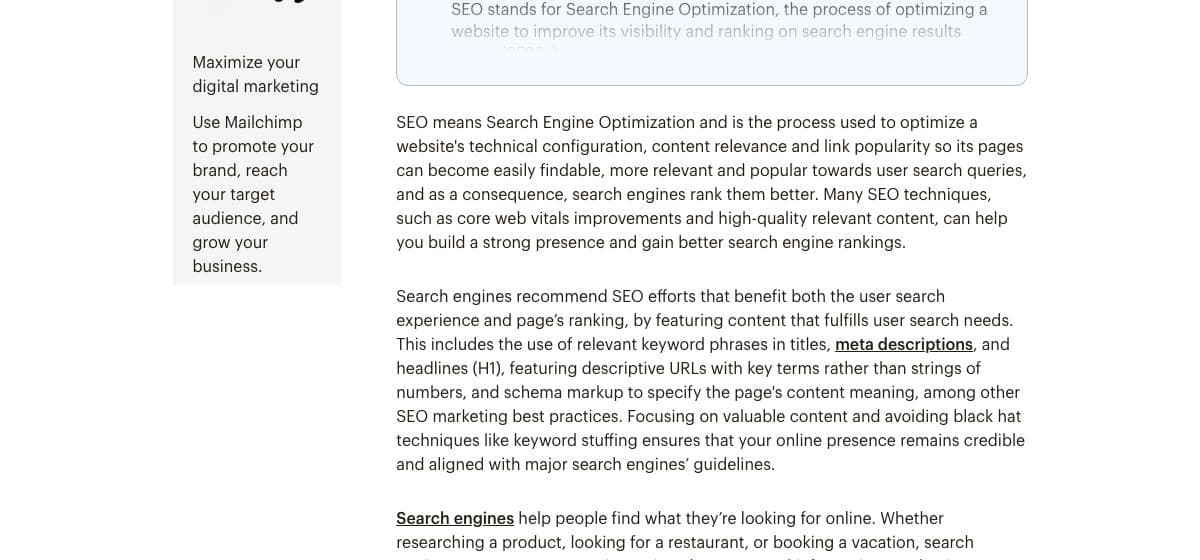
A glossary entry by Patrick Hathaway, a co-founder of Sitebulb, writing for Mailchimp. About 1,350 words, with no date shown.
What to copy: the first sentence of the body is the definition, in the form "SEO means...". Someone searching for what a term means gets the answer before anything else, and the short summary above it is a set of questions phrased the way beginners ask them. For a definition post, that is the whole job.
What not to copy: no date, and the entry still says AdWords three times, which Google renamed Google Ads in 2018. Its last heading also has the current year in it, which means someone has to edit it every January, and the page looks stale whenever they forget.
Teaching with numbers: Zerodha Varsity, The Need to Invest
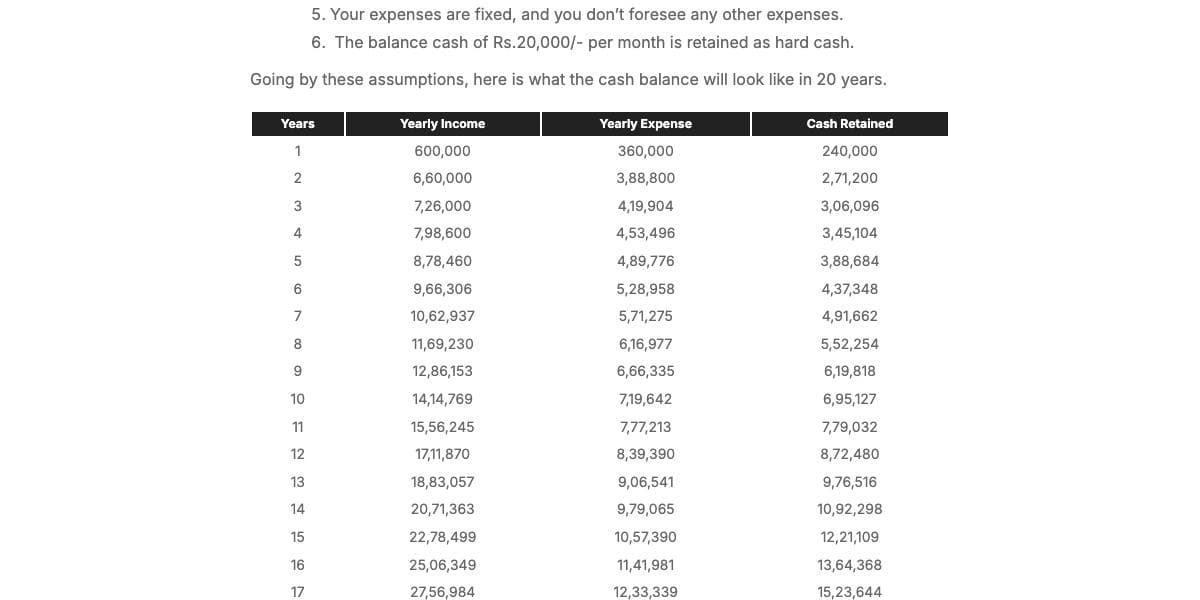
The first chapter of Varsity's first module, about 2,050 words, with more than 1,300 comments below it. It opens with a worked example rather than an argument: a salary of Rs 50,000 a month, expenses of Rs 30,000, and Rs 20,000 left over.
What to copy: the example goes all the way. That one ordinary salary is carried into two 20-year tables, one where the surplus sits as cash and one where it is invested, and the chapter offers the spreadsheet behind them as a download. The reader does not have to take the conclusion on trust. They can change the numbers and check it.
What not to copy: no date, while the chapter quotes rates as of a particular month in 2022. A reader in 2026 has no way to tell how old the figures are from the page itself.
Posts that prove something
Original data: Ahrefs, 96.55% of Content Gets No Traffic From Google
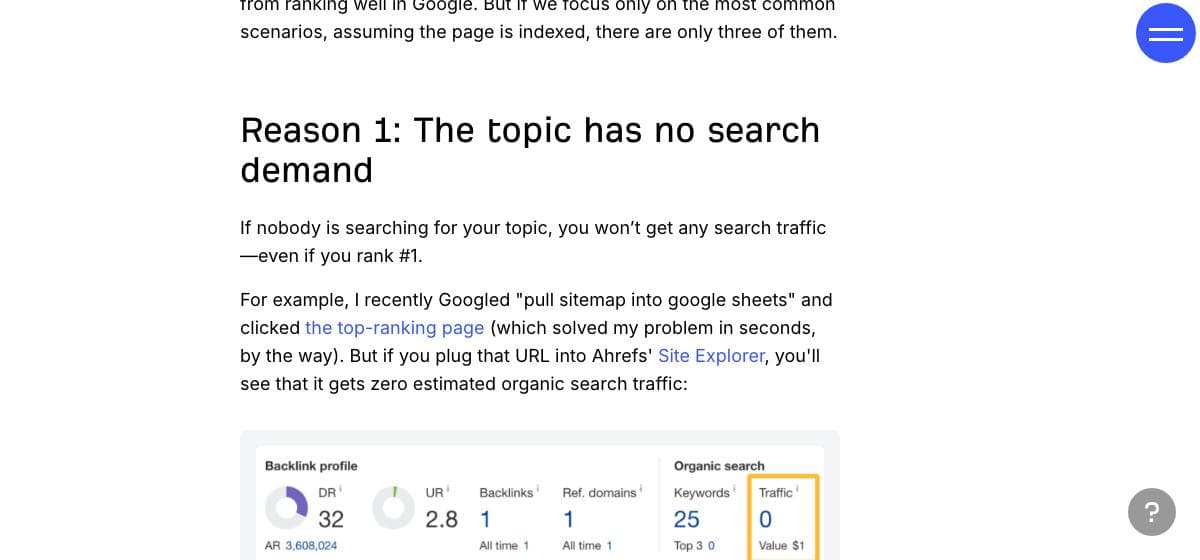
By Tim Soulo, published on 1 December 2023, about 1,300 words with 18 charts and screenshots. The data comes from Ahrefs' own index of about 14 billion pages, and the page says close to 4,000 websites link to it.
What to copy: one statistic becomes the whole outline. The headline number raises an obvious question, why, and the post answers it with three reasons, each one a heading with a fix underneath. A two-line summary at the end repeats the number and the fixes. Original data is the most linkable thing most people can make, and this is how to make it readable.
What not to copy: the title ends with "[New Research for 2023]", and the page shows no updated date, so in 2026 the title is the first thing that makes it look old. Its address has no year in it, which is the right call: a title can be changed, and an address is much harder to.
A case study: Brian Dean, the Skyscraper Technique
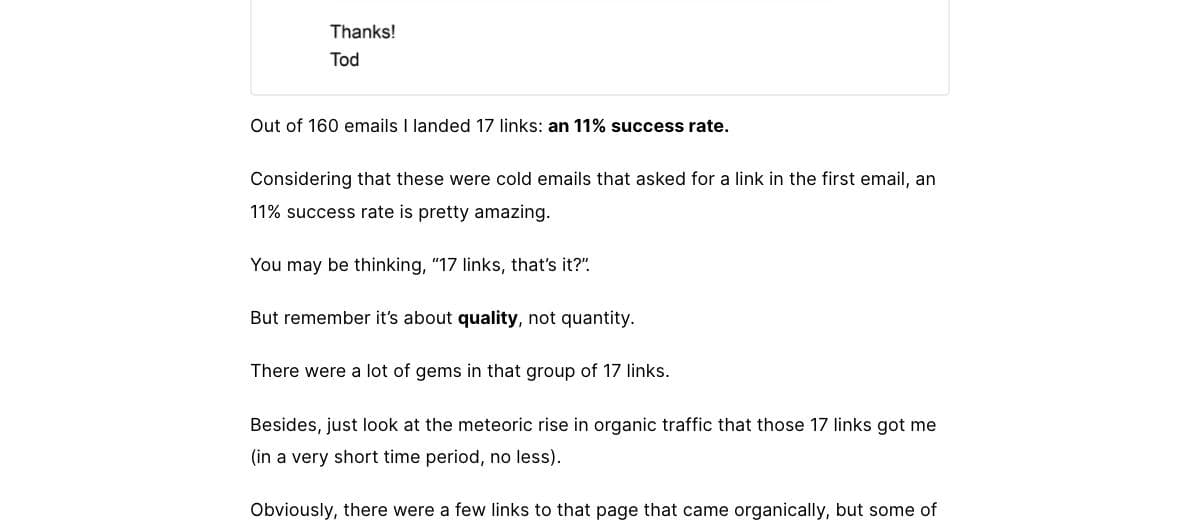
About 1,400 words, marked as last updated on 20 June 2024. It describes a link building method and the traffic it brought to one page.
What to copy: the denominator. Plenty of case studies report the win. This one says 17 links came from 160 cold emails, an 11% rate, and puts a number on the hours it took. That one sentence is what makes the result believable and useful: you can see what the method costs before you try it.
What not to copy: the 2024 update date sits on results from 2013. An "updated" stamp tells readers the content is current, and here the numbers are eleven years older than the date suggests.
An outage report: Cloudflare, the 18 November 2025 outage
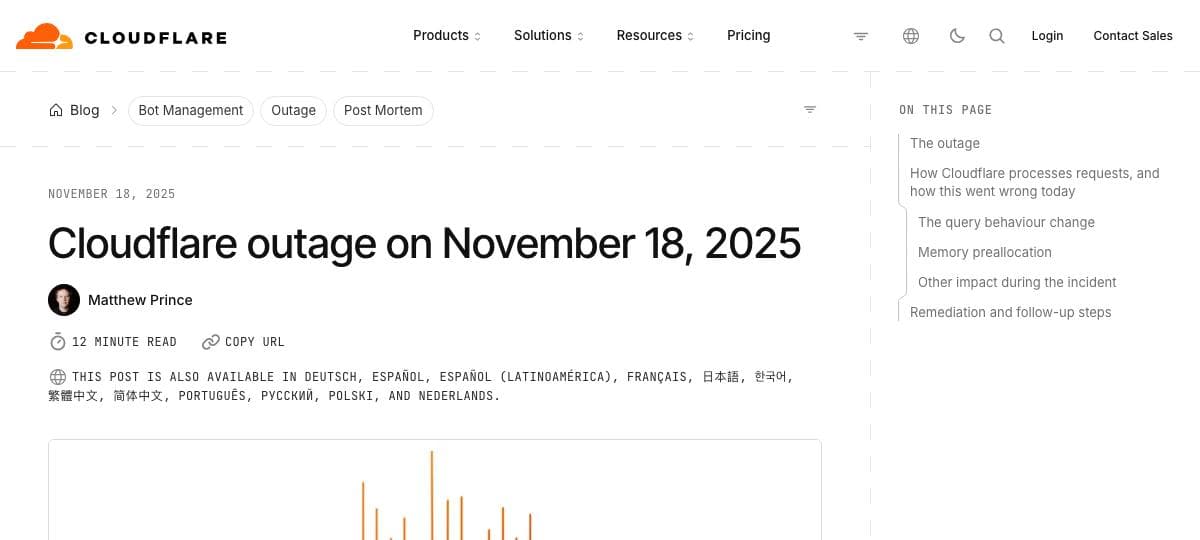
By Matthew Prince, published on the day itself, about 2,600 words. It opens with an exact time and says every time in the post is in UTC.
What to copy: it shows the thing that broke. Not a description of a configuration problem, but the actual database query, the code that failed and the error it logged. It also says what the team got wrong first: they suspected a very large attack before finding the real cause. Admitting the wrong guess is what makes the rest credible. It is also the most complete page of the 13 for the reader's basics: a date, an author, a reading time, a contents list and a timeline of the incident from start to finish.
What not to copy: nothing worth mentioning. If you ever have to write about something going wrong, start here.
Posts that help someone decide
A comparison: Zapier, Obsidian vs. Notion
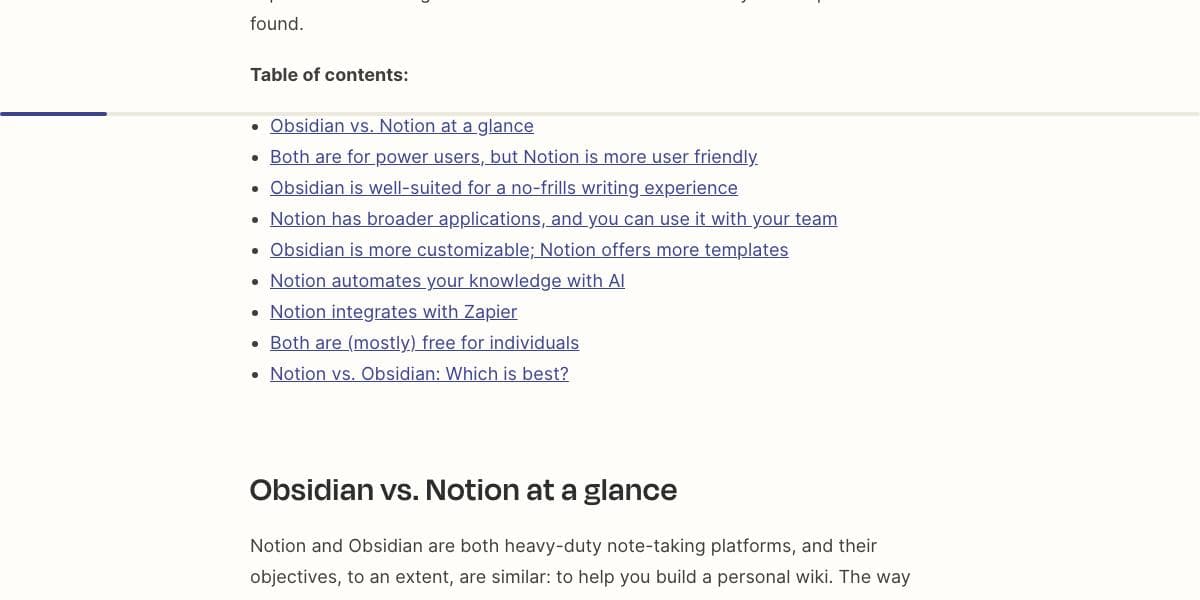
By Shubham Agarwal, published on 19 June 2025, about 2,100 words. Its first section is a table rating both apps on six criteria, and the writer says the comparison comes from weeks of testing both.
What to copy: every heading is a verdict, not a topic. Not "Customisation" but "Obsidian is more customizable; Notion offers more templates". Someone skimming the contents list learns who wins each round without reading a paragraph. Most comparison posts make you read a whole section to find out which side it came down on.
What not to copy: one section is about how Notion connects to Zapier. That serves the publisher, not the comparison, and readers notice.
A changelog: Linear, Introducing Loops
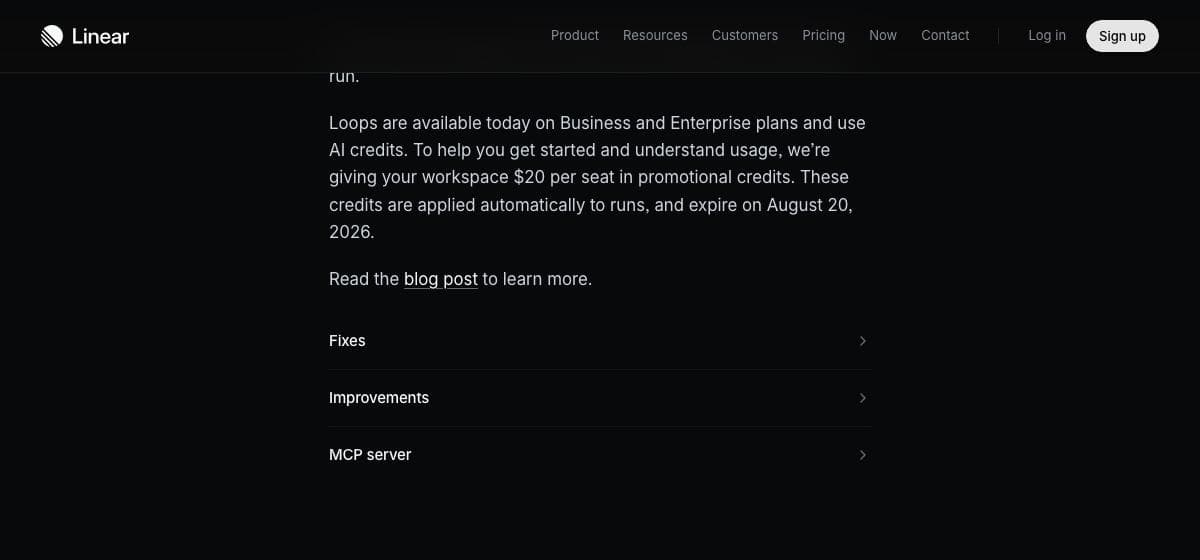
Published on 20 July 2026, about 600 words including the list of fixes. It opens with one sentence saying what the new feature is.
What to copy: it is exact where most changelogs are vague. Which plans get the feature, how much promotional credit comes with it per seat, and the date that credit expires, all in one paragraph. Below that, fixes and improvements are listed by the part of the product they touch, and each one is a sentence a user would recognise. A changelog is read by people asking "does this affect me?", and this one answers that in under a minute.
What not to copy: no author, and the demonstration is only in video, with no text version that I could find.
A business explainer: Finshots, What actually makes a hospital profitable?
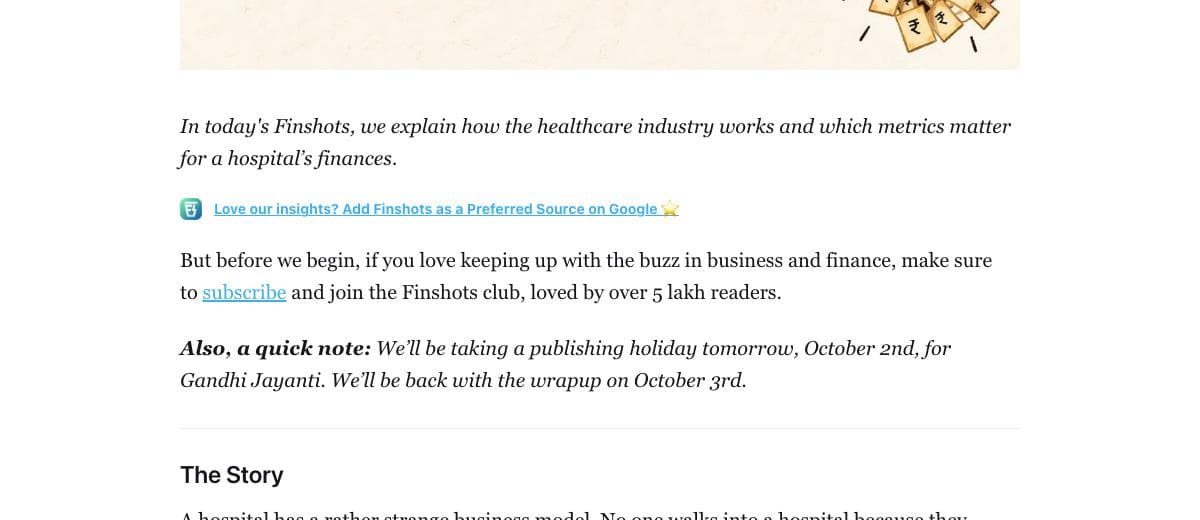
Published on 1 October 2026, about 1,300 words. It opens with a one-line surprise: a hospital has a strange business model.
What to copy: before the story starts, one sentence says exactly what you will learn, how the industry works and which numbers matter for a hospital's finances. Then the piece delivers it, with named measures like occupancy, revenue per occupied bed and average length of stay, and real numbers from real companies. The promise is specific, so you can tell at the end whether it was kept.
What not to copy: an insurance advert sits in the same column straight after the piece, with a headline of its own that reads like part of the article.
What the 13 have in common, counted
I went through each page and noted what it had. Some features were partly there: Chris Beams' summary is a list after an introduction rather than at the very top, and Mailchimp's contents box has one entry. The chart counts only the ones that are fully there.
The date is the one thing nearly all of them agree on, and the two without one are the two with content that has visibly aged. That is not a coincidence. A date is how a reader works out how much to trust what they are reading.
Nothing else is close to universal. Three of the best known posts here, Graham's, Spolsky's and Altman's, have almost none of the usual checklist: no summary, no contents list, no original visuals. They work because each has one idea and argues it properly.
And none of them has an FAQ section. The posts on this site do, because people search for the questions and the answers are useful to have in one place. But it is worth knowing that none of these 13 needed one to be good. An FAQ is a choice about search, not a sign of quality.
How to borrow from an example
Pick the example by the job your post is doing, not by how much you like the site. Then take one move, not the whole post:
- Writing an argument? Lead with a checkable story, like Spolsky, and put your caveats in notes, like Graham.
- Writing a how-to? Put every step in one list near the top, like Beams, then explain each one.
- Publishing data? Turn the headline number into the outline, like Ahrefs, and give the denominator, like Backlinko.
- Writing about a mistake? Show the thing that broke and the wrong first guess, like Cloudflare.
- Comparing two things? Make every heading a verdict, like Zapier.
- Announcing something? Say who gets it, what it costs and when, like Linear.
- Explaining a term? Define it in the first sentence, like Mailchimp, and date the page, unlike Mailchimp.
Then check the basics the examples get wrong: a date on anything that can go out of date, alt text that says what an image shows, and an updated stamp only when the content actually changed.
The short answer
A good blog post example is one you can learn a specific move from. These 13 each have one: notes that keep an essay confident, a list of rules before the explanation, a statistic that becomes an outline, the number of emails behind a result, the actual code behind an outage, headings that give the verdict.
Very little else is shared. Almost all of them show a date, and the ones that do not have aged badly. Beyond that, the best posts here look nothing alike, because each was built for its own job. Work out the job first, then borrow the move that fits it.